
St Paul Old Ford annual report 2025
Vicar’s report
This past year has been another year of significant change for us as a church, particularly in staffing and the wider life of the church. There have been times where things have felt unsettled, with long-term sickness, staffing transitions, and moments of loss that have shaped the landscape of our life together.
At the same time, I would describe 2025 as a season of rebuilding, not trying to get back to how things were, but learning anew what it means to be church in this moment.
We also felt the loss of Rev April following her retirement in October 2024, particularly in terms of the ministerial presence she brought to the life of the church. Her departure left a noticeable gap in the rhythm of ministry and pastoral oversight. In response to this, myself, Billy, Anne and others have carried more of the ministerial load across the year, seeking to ensure continuity in preaching, teaching, and pastoral oversight.
Anne continued to carry a significant amount of pastoral responsibility during this period, and I am deeply grateful for the way she has served the church in that capacity. Billy has been a real gift to the church, leading worship and preaching at least once a month, which has also enabled me to spend intentional time with the youth. This shared approach has been an important part of sustaining the wider life of the church through a period of transition.
What has been steady throughout is our worship. It’s the people who gather to worship, and the worship that shapes us, and continues to form us into a Christ-shaped community. Jesus said that people will know we are his disciples by our love for one another, and I’m deeply encouraged to continuously see the love of Christ lived out in real ways among us.
One example of that has been the care around Heather Peters in her final months, where people across the church stayed in contact with her and visited when they could. Even as her health declined, she remained very much part of the life of the church, particularly through her fellowship with the Wednesday Bible study, where she was deeply known and loved.
In 2025 we also saw signs of new life. New people joined us, and new patterns of ministry began to take shape. Following a visit from Rev Evonne Galloway, we introduced Christian meditation, which has now become a weekly rhythm. We had our first ‘Bible Basics’ workshop, and the Wednesday Bible study was relaunched in the church cafe. These smaller gatherings are essential for us as a church, because they enable worshippers to be rooted in the life of the church.
One of the most significant signs of new in 2025 came through the baptisms we celebrated on Easter Sunday in the vicarage garden pool. Two children, three young people, and one adult were baptised, alongside one person who reaffirmed his baptism vows following confirmation on Easter Saturday. It was a deeply moving occasion and a clear sign of God at work among us. The testimonies shared on that day were particularly powerful and spoke of real transformation and people meeting Jesus in the life of St Paul Old Ford.
At the same time, this last year had its harder moments. We were unable to restart ‘Rise’, our Monday youth club, having made the difficult decision to pause it when it was at its busiest point in my time here. That came following Debbie’s illness and the loss of key volunteers. That was painful, but it was the right decision for safeguarding and pastoral reasons. This reminded me again that we’re not ultimately in control of the direction of things, and that we have to trust God even when plans don’t unfold as we would want or expect.
There have also been wider transitions in the church, with some long-standing patterns changing as people step back and others step forward. While that has brought a sense of loss at times, it has also created space for new people to take responsibility and for new forms of ministry to emerge.
In 2025 the parochial church council (PCC) brought in a consultant, Andrew Bagwell, to carry out an organisational health audit of the church. One of the clear outcomes of that process was recognising that we need stronger operational capacity. This led to the emerging plan to recruit an operations manager, since a significant amount of day-to-day operational responsibility has continued to sit with myself and the church wardens.
Alongside this, we continue to face challenges around financial oversight, having now been without a treasurer for the third year running. This remains an area of vulnerability for us as a church. That said, I want to say that the PCC itself has functioned well over the past year. Despite pressures, it has been a constructive and committed group, and I am grateful for the way people have served with faithfulness and care.
Overall, we are becoming a church that is learning to fix its eyes on Jesus not only on Sundays, but through the week as well, as prayer, worship, and formation continue to shape our common life. In all of this, I remain confident that God has been, is, and will continue to be at work among us.
As we look ahead, the PCC are preparing for a ‘vision Sunday’, where we will gather as a church to listen together to what we believe is at the heart of our God-given identity. It will be a space to ask again who we are, and who Christ is calling us to become.
Alongside that, the PCC is also planning a ‘giving Sunday’, where we will reflect on the gifts God has given each of us and how He calls us to use them. This is really about participation; about each of us taking our place in what God is doing among us and playing our part in the life of the church.
My sense is that 2026 will be a year in which vision becomes clearer as we continue to listen together to what God is saying to us, and as that happens, participation across the church will deepen. In this, we are learning more fully what it means to be the body of Christ, where each person has a part to play, and every gift is needed for the life and flourishing of the whole church.
Church finances
2025 overview
The PCC is pleased to report that total income for the year ending 31 December 2025 was £320,768, an increase of 15.8% on the previous year (£276,916 in 2024).
Total expenditure for the year was £314,726 (compared to £278,228 in 2024), resulting in a net surplus of £6,042 (compared to a net deficit of £1,311 in 2024). This is a welcome return to a positive overall position after the small deficit recorded the year before. Total funds carried forward at 31 December 2025 were £457,966 (compared to £451,924 in 2024).
Church income
The largest source of income was trading activities, which contributed £238,356. This includes property rental income and building hire fees, which continued to be a core income source for the church. The strong performance of venue hire, which had reached record levels in 2024, was sustained during the year.
Donations and legacies totalled £75,018 (compared to £82,717 in 2024). While unrestricted donations and legacies fell to £35,896 (compared to £82,717 in 2024, all unrestricted), the church received £39,122 in restricted donations during 2025, a significant development since we had not received any restricted income in 2024. These restricted funds were designated for two purposes: building maintenance, and local support, hardship and community work.
Investment income was £5,441 (compared to £6,105 in 2024), reflecting a modest reduction in deposit account interest. We also received other income of £1,953 during the year.
Church expenditure
Our total expenditure in 2025 was £314,726, which was incurred entirely against unrestricted funds.
The vast majority of this spending was charitable activities, which accounted for £313,076. This includes:
- staff costs
- church running costs
- Common Fund contribution
- ministry and building-related expenses
Governance costs were £1,650, unchanged from the previous year and was the independent examiner’s fee.
The PCC is aware that unrestricted expenditure of £314,726 exceeded unrestricted income of £281,646 during the year, resulting in an unrestricted fund deficit of £33,080. This was more than offset at total fund level by the restricted income received, but the underlying unrestricted position is an area the PCC will monitor closely in the year ahead.
Further financial information
You can find more financial information by downloading the annual accounts report below.
St Paul Old Ford annual accounts 2025
Treasurer
The church treasurer role remained vacant throughout 2025, which was a significant operational challenge. Financial oversight was shared among existing staff and PCC members, with support from a financial adviser and our independent examiners.
Reserves
Our reserves policy is under review to ensure that the church can cover at least three months’ essential operating costs. The PCC is committed to maintaining financial stability and is working to recruit a new treasurer.
Church wardens’ report
The church warden’s report in the annual report is traditionally called the ‘fabric report’, because it’s meant to be about the ‘fabric’ of the building. We’ll get to that, but first some shoutouts. At St Paul’s, the church wardens do less of the traditional building management role, because our amazing staff team do that every day. They take room bookings, set things up, attend to enquiries, arrange cleaning and repairs and much, much more.
In 2025 the team included Grace, Iryna and Kay in the office and Trevor, our handyman who does so many jobs around church. In late summer, we said goodbye to Divya, our venue manager since 2021, and who had been part of the team at St Paul’s for much longer before that. We wish her all the very best for the future. There’s also Jeanette in the café, but more from her later in the report. We also want to mention the bank staff, who do so much to help our out-of-hours bookings happen.
The main part of the church wardens’ role at St Paul’s is supporting the vicar and helping to make decisions and provide leadership to the church through the standing committee and the PCC.
But back to the buildings. The biggest job we had to do in 2025 the inspection and repair of the inside of the Tower Room roof, which was funded from Heather Peters’ legacy. The other main job was installing the induction loop.
You can see the overall figure for how much we spend on building maintenance in the financial report. But just to make it clear that this includes:
- repairs and general maintenance (including lift maintenance, and a range of smaller plumbing, drain, lighting and lift repairs)
- cleaning contracts and supplies
- vicarage maintenance and repairs (mainly the new patio outside the garden room)
- Hooke House (a property we own) service charge
- health and safety (mainly fire extinguisher checks)
- pest control
- waste and refuse
So, you can see that there’s a lot of ongoing work, week after week to keep the building running and we need to make sure checks and repairs keep getting done. Making sure the building is safe, accessible and able to be used by the whole community.
If anybody has any questions about the buildings, repairs or more detail on what we’ve spend on these, please ask us.
Church wardens: Tim Murray and Melanie O’Reilly
Worship
Worship has continued to be a steady and central part of our life as a church. In another year of change and transition, it has been the place where we gather, are formed, and are re-centred in Christ. Worship is not simply what we do on Sundays, but the rhythm that holds the life of the church together.
We’ve continued to see worship expressed in different ways across the week: through the Eucharist, through online prayer, through Bible study and Christian meditation, and through other spaces of reflection and teaching. These rhythms are shaping us as a community that seeks to fix its eyes on Jesus, not only in gathered worship but in the wider life of the week.
At its best, our worship is forming us into a people of love and care for one another, and for God’s world. It’s here that we are reminded that we are the Body of Christ, and that we belong to one another. In this sense, worship is not separate from the life of the church, but is the place from which our life together flows.
St Paul Old Ford the community hub
Across the week, St Paul Old Ford functions as a well‑used shared community space, hosting a wide range of activities run by external hirers, partner organisations, and long‑term tenants.
From mornings through to evenings, the building supports groups working with babies and carers, children and young people, learners, and adults, alongside fitness, wellbeing, creative, and educational sessions.
The church is also home to Ability Bow and IntoUniversity, whose ongoing presence brings a regular weekday rhythm and embeds the building even more deeply in the life of the local community.
Alongside this community use, the space is also used regularly for midweek church activities, including Bible study, Christian meditation, and church meetings. These gatherings ensure that prayer, reflection, and shared discernment remain part of the building’s life beyond Sundays, sitting naturally alongside the wider pattern of weekday use.
This overall pattern is made possible by the committed work of an excellent staff and volunteer team, who host the building week by week with care, professionalism, and warmth. Their work enables the church to offer consistent hospitality, supporting a wide range of community activity while also sustaining the worshipping and organisational life of the church.
St Paul’s Kitchen
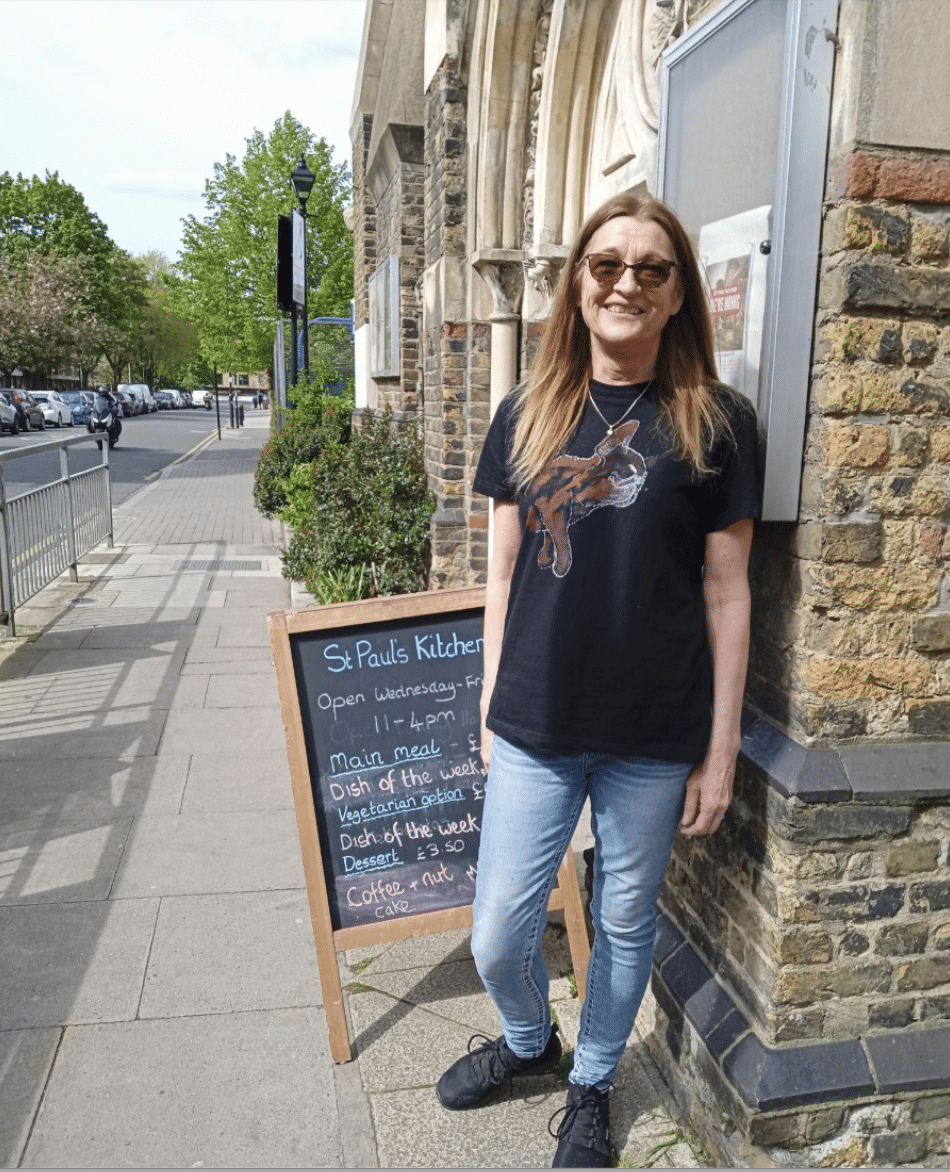
In this year’s report, we’ve got a focus on our church café, St Paul’s Kitchen. Firstly with a report on the year from Rev Darius, followed by a bit of passionate promo from our cook, Jeanette Macleod.
Report of the year
In 2025, St Paul’s Kitchen (SPK) generated £12,635 in income against £4,479 in non‑staff expenditure, resulting in a strong operating surplus of £8,155. This confirms that the kitchen is working well in its core activity, with healthy income and excellent oversight of day‑to‑day costs, supported by a growing number of regular customers who return week by week. When staffing costs are included, the kitchen moves into an overall deficit, reflecting our intentional investment in the café as a ministry and welcoming community space.
SPK’s success is closely tied to Jeanette herself, whose beautiful food, generous hospitality, and careful stewardship of resources make her one of the faces of St Paul’s. Her food offers exceptional quality and value, she wastes very little, and she is a key reason why many people choose to visit SPK.
Rose works alongside Jeanette as a much‑valued regular volunteer. Her generosity of time, faithfulness, and quiet reliability make the café possible week by week, and her contribution is essential to its continued success.
All of this means that so far, our prices haven’t increased since we opened in 2023, meaning a main meal remains £5! The strength of the kitchen’s performance suggests that, over time, there is scope to review pricing sensitively and further strengthen sustainability, while remaining true to its spirit of generosity and hospitality.
We are grateful to all who support the café in various ways, and especially to Jeanette and Rose, whose commitment, generosity and faithful service continue to shape the café as a place of welcome at the heart of St Paul’s.
We’re proudly stuck in the past… in the best possible way
Jeanette Macleod,
That’s right: we’re stuck in the past.
You won’t find fancy coffees with complicated names, endless menus, or food designed more for photographs than for eating. We keep things simple, honest, and full of heart.
We serve one main meal each week, made properly, the way good food should be. The kind of meals that bring back memories of family kitchens, full tables, and the comforting smell of something delicious cooking.
Think warm bread pudding, freshly baked lemon drizzle cake, homemade scones, and traditional favourites like shepherd’s pie, chilli, gammon with potato salad, and other hearty classics that never go out of style.
And we’re not afraid to turn up the flavour too. Our much-loved jerk chicken and curried goat have become real favourites with those who enjoy something a little bolder.
What we may lack in fuss and fashion, we make up for in warmth, flavour, and genuine hospitality. Expect homemade food, friendly old-fashioned service, great classic songs on the radio, and a welcoming atmosphere where everyone feels at home.
So if you’re tired of overpriced trends and want a meal made with care, come and visit us.
We can’t promise fancy.
But we can promise that you’ll leave happier than when you arrived.
Youth ministry
This past year has been a year of both challenge and adaptation within our youth ministry, alongside some encouraging signs of new life.
We were grateful to have Hina with us as a youth intern during this period. She worked with us at the Morpeth School lunch club, in partnership with St Paul’s Shadwell’s youth pastor, and this provided a valuable bridge of continuity in our engagement with young people during a season of transition. Her presence helped sustain relational connection with young people in a time when other parts of the youth work were under pressure.
Our Sunday youth group continued, largely led by volunteers, and this has provided a consistent and relational space for young people on Sundays. This is still developing, but it is an important step in rebuilding a regular rhythm of youth discipleship.
We are deeply grateful for the commitment of volunteers who have carried youth ministry through this season of change. Their faithfulness has ensured that young people are still known, cared for, and included in the life of the church, even as structures have shifted.
The Easter baptisms were a significant moment, with young people among those who were baptised. These moments continue to remind us that God is at work in the lives of our young people in ways that are often both quiet and profound.
A continuing challenge for us as a church is the reality that sustaining and developing ministry is a significant investment. Where we don’t have staff capacity, the responsibility inevitably falls more heavily on volunteers, clergy, and a small number of key individuals. So, as a church, we need to continue to work through what it means to resource the vision God is placing among us. This will require honest and prayerful reflection together about stewardship, generosity, and the practical realities of funding the ministry we believe we are being called into.
Nonetheless, through all our challenges and triumphs, we continue to trust that God is at work among our young people, and that even in seasons of change and interruption, He remains faithful and present.
Church activity through the week
Prayer
Prayer is a vital part of our church life, as we speak to God and listen for him speaking to us.
In 2025 we started weekly Christian meditation, as noted in the vicar’s report. This happens on Wednesdays at 7pm.
We also started weekly prayer before the Sunday service, gathering at 10:15am for a short time of led prayer.
The already-established prayer times continued, mainly midday prayer on weekdays in the Tower Room and online prayers every Saturday morning at 10:30am, led by Rev Darius.
Bible study
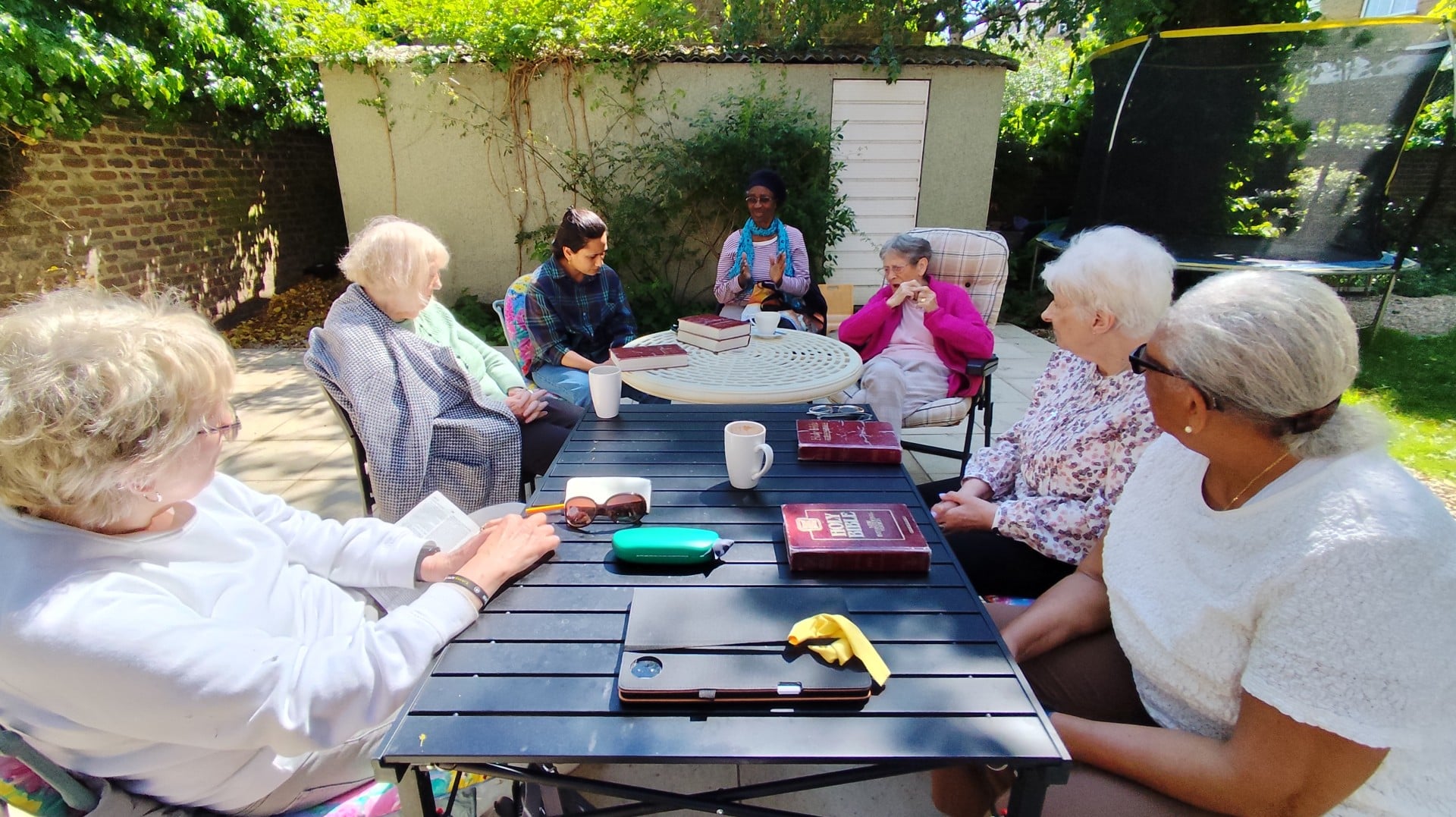
Our weekly Bible studies are an opportunity for us to deepen our faith and to care for one another. 2025 saw 2 regular weekly Bible studies. These were:
- lunchtime Bible study at 12.30 in the Garden Room
- evening Bible study at 7:30pm in the church cafe
We decided to end our weekly Bible in the pub meetings at The Eleanor Arms, after many years meeting there. There were various reasons for doing so, but mainly to consolidate the Wednesday evening studies, making it easier for more people to attend. Also, the environment in the Eleanor because less conducive to Bible study, with football being shown most weeks.
Other groups
The men’s breakfasts continued regularly throughout 2025, assembling a group of men in the church cafe on Saturday mornings for a time of food and fellowship.
2025 also saw the start of a women’s breakfast, along similar lines, with women from St Paul’s meeting regular for food and fellowship.
Food bank
We have a trunk inside the reception area that’s used to collect food and other essential materials for the Bow Foodbank. Chris delivers this every Tuesday to the foodbank’s Roman Road centre round the corner. It contributes to a very urgent need, which is sadly always growing.
Safeguarding report
This report is by Jean Robinson, our Parish Safeguarding Officer (PSO)
Safeguarding in the Church of England
The Church of England sees safeguarding as a core part of its mission, putting in place policies to protect children, young people and vulnerable adults. It continues to face significant scrutiny and criticism about historical abuse, institutional cover-ups and structural failings. In response, there is a clear safeguarding structure with a national team managing safeguarding cases relating to clergy and driving national initiatives. Diocesan safeguarding advisers (DSAs) operate at diocesan level to advise on complex cases and ensure parishes follow policies. And PSOs make sure volunteers and staff are safely recruited and compliant with training, and make sure proper reporting procedures are visible in the parish. St Paul’s continues to use My Concern as a recording system when concerns arise. INEQE Safeguarding Group is currently carrying out independent external audits of all dioceses and cathedrals. We were encouraged to respond to a request to complete a survey last year and parishes have been thanked for their responses. The Diocese of London safeguarding audit report has now been published:
Safeguarding activity at St Paul’s
We want St Paul Old Ford to be as safe a place as possible for everybody who uses the building, so we need to be sure we have a culture which supports this and have robust policies in place in line with good practice. We marked Safeguarding Sunday in November 2025 with a service when we remembered and prayed for people affected by abuse and reaffirmed our commitment to protecting the vulnerable.
Safeguarding is always an item on the PCC meeting agenda. Policies require regular review as well as other issues as they arise. Information is on display and reviewed annually. We run activities for children, young people and vulnerable adults which the PCC oversees. These are the Sunday school, Sunday youth group, Morpeth lunch club (which runs with input from staff from 2 other churches in the deanery), and the pastoral team. We also run small Bible studies and men’s and women’s breakfast groups and have a welcome team. Rise (the Monday youth group) and stay and play are not currently running.
Recruitment, DBS Checks and safeguarding training
All volunteers who work with children, young people or vulnerable adults need to undergo a safer recruitment process along with a Disclosure and Barring Service (DBS) check at an appropriate level and complete appropriate training. These are ‘Basic Awareness’, ‘Foundations’ and ‘Awareness of Domestic Abuse’. This all has to be done before starting as a volunteer, and generally needs to be updated every 3 years. Training is mostly done online but arrangements can be made for group in-person sessions. Although levels of compliance with DBS checks and training are higher than previously, there are still currently some volunteers who need to undertake DBS checks and training.
Diocesan safeguarding team
As concerns arise, they are reported to the diocesan safeguarding advisers (DSA) The diocesan team are responsive and very helpful and supportive with advice. Sara Black, manager of the Safer Churches Team visited in December and offered general advice and suggested we think about possible safeguarding issues which might arise from the structure and layout of our church building. PSOs are able to attend monthly zoom meetings with a member of the team to offer advice, updates and information. There have also been recent DBS training sessions online to cover what is a complex system.
Thanks
I would again like to thank everybody in the congregation for their willingness to engage and support safeguarding. Many people have given their time to complete the required training and checks for which I am very grateful. I would like to thank Kay Norman, Grace Weithers and Iryna Radzvion in the office for their help. Thank you also to members of the PCC who are always good listeners. Tim Murray and Melanie O’Reilly, Church Wardens are eternally supportive and willing to listen. Many thanks also to Darius for his ongoing support and input.
I would also like to take this opportunity to remind everybody whether a volunteer or not that safeguarding is everybody’s business.
Church governance
PCC aims and objectives
At the heart of our life together is our calling to worship God, to grow as disciples of Jesus Christ, and to serve the wider community with the love of Christ. The parochial church council (PCC) seeks to support and enable the church to be a place of welcome, belonging, and spiritual formation, where people of all backgrounds can encounter Christ, grow in faith, and learn how to serve Christ in the world.
In practical terms, the PCC works to:
- sustain and develop the worshipping life of the church, centred on the Eucharist and the ministry of word and sacrament
- encourage discipleship, teaching, and prayer that form people in the way of Christ
- support pastoral care and the building of a community marked by love, hospitality, and mutual support
- develop mission and outreach within the parish and wider community
- ensure the responsible stewardship of the church’s resources, buildings, and finances
- oversee safeguarding, health and safety, and all statutory responsibilities required of a parish church
The PCC seeks to hold together faithful worship, active discipleship, and outward-facing mission, so that the church may continue to grow as a living body of Christ in this place.
PCC report
The PCC met regularly over the course of the year and continued to provide governance and oversight for the life of the church during a period of significant change.
A key focus for the PCC has been navigating staffing transitions, including long-term sickness and the departure of key members of staff. Alongside this, the PCC has worked to ensure continuity in the life of the church while supporting the wider staff team and volunteers.
The PCC also commissioned an organisational health audit, carried out by Andrew Bagwell. One of the main outcomes of this process was the recognition of the need to strengthen operational capacity within the church. As a result, work began towards the potential recruitment of an operations manager.
Financial oversight remained a challenge, particularly as the PCC has continued to operate without a treasurer for a third year. This has placed additional responsibility on the incumbent and churchwardens and remains an ongoing priority for the PCC to address.
The PCC has maintained oversight of safeguarding, health and safety, and the general governance responsibilities required of a parish church. Despite the pressures of the year, the PCC has functioned well as a body, working constructively together and demonstrating commitment to the life and mission of the church.
How the PCC works
The PCC is a corporate body established by the Church of England. The PCC operates under the Parochial Church Council Powers Measure 1956. The PCC is a registered charity. Appointment of PCC members is governed by and set out in the Church Representation Rules.
Members of the PCC are either ‘ex officio’ (on the PCC because of another position they hold, like church warden), elected at the APCM, or co-opted in line with the Church Representation Rules.
The PCC meets 5 times a year, to oversee the spiritual, financial, and practical affairs of the parish. It hears reports of church business and makes decisions about the running of St Paul’s. It is chaired by Rev Darius.
We also have a standing committee made up of the vicar, the churchwardens, the treasurer (when we have one) and the secretary, who handle the church’s business between PCC meetings. They are authorised to act on behalf of the PCC, subject to any directions and decisions by the full PCC.
PCC members
The parochial church council (PCC) members in 2025 were:
- Rev Darius Weithers (vicar)
- Melanie O’Reilly (church warden)
- Tim Murray (church warden)
- Billy O’Reilly (self-supporting minister)
- Rob Lowther-Adamson (secretary – left at 2025 APCM)
- Peter Kessler (secretary – co-opted after 2025 APCM)
- Emma Andrews
- Victor Cummings
- Shola Ogunlade
- Matthew McKay
- Janet Andrews
- Anne Zakiewicz (pastoral assistant)
- Andrew Walters (licensed lay minister)
- Tracey Yeman (deanery synod rep)
- Jean Robinson (safeguarding officer)
Ex-officio members have their position in brackets after their name.
PCC accountability statement
The PCC is a charity registered under the Charities Act 2011. The members of the PCC are the charity’s trustees and are responsible for ensuring that the church is administered in accordance with charity law and the Church Representation Rules.
The PCC is responsible, in co-operation with the incumbent, for promoting the whole mission of the Church: pastoral, evangelistic, social, and ecumenical within the parish. In carrying out this responsibility, the PCC acts as a body of trustees, seeking to ensure that the church’s resources are used prudently and in the best interests of its charitable purposes.
The PCC is responsible for ensuring proper financial oversight and record-keeping, the preparation and approval of annual accounts, and compliance with all relevant legal and regulatory requirements. This includes oversight of safeguarding, health and safety, and other statutory duties required of a parish church.
The PCC also has responsibility for the maintenance of the church buildings and other assets, and for ensuring that the life and activities of the church continue to support its calling to serve the parish and wider community.
In all of this, the PCC seeks to act transparently, faithfully, and collaboratively, holding together its legal responsibilities as trustees with its shared calling to serve the mission of the Church.
Administrative information
The Parish of St Paul and St Mark, Old Ford
St Stephen’s Road
Bow
London E3 5JL
Charity number: 1133963
Vicar: Rev Darius Weithers
Church wardens: Melanie O’Reilly and Tim Murray
PCC secretary: Peter Kessler
Treasurer: vacant
Bank: Barclays
Independent auditor: Alex Mutyaba, Alex & Co, Chartered Certified Accountants
All News